
Global Leaders Converge in Davos as World Economic Forum 2026 Highlights Trade, Security and Cooperation

Independent Report
Davos, Switzerland – 21 January 2026:
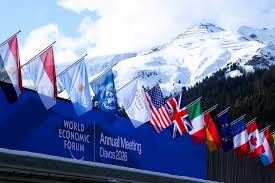
A high-level cohort of global leadership is participating in the 56th Annual Meeting of the World Economic Forum (WEF) in Davos, where more than 65 heads of state and government are engaging in discussions on pressing global issues, including economic cooperation, trade tensions, and geopolitical stability.
World leaders, policymakers, and business executives have gathered under the summit theme “A Spirit of Dialogue”, attended by nearly 3,000 participants from 130 countries and approximately 850 of the world’s top CEOs, signaling broad commitment to multilateral engagement amid rising global risks.
Key Speeches and Messages
Swiss President Guy Parmelin delivered the official opening address, calling for unity among nations and urging collective action to tackle major global challenges, emphasizing cooperation across society, science, and politics to achieve lasting solutions.
European Commission President Ursula von der Leyen outlined Europe’s efforts to establish new trade links and adapt to evolving global security dynamics, stressing that Europe remains committed to a rules-based international framework.
Chinese Vice‑Premier He Lifeng called for expanded global economic cooperation, noting that trade conflicts and tariffs produce no winners and urging countries to avoid isolationism in pursuit of shared prosperity.
French President Emmanuel Macron highlighted the need to defend effective multilateralism amid a rapidly shifting geopolitical landscape, underlining France and Europe’s role in upholding international norms.
Canadian Prime Minister Mark Carney delivered a stark assessment of global geopolitics, arguing that the traditional rules-based order is under strain and that middle powers must adopt a pragmatic approach to cooperation in the face of emerging challenges.
Global Participation and Agenda
Prominent heads of state and government attending the forum include Donald Trump (USA), Friedrich Merz (Germany), Javier Milei (Argentina), Prabowo Subianto (Indonesia), Ilham Aliyev (Azerbaijan), Bart De Wever (Belgium), Gustavo Petro (Colombia), Félix‑Antoine Tshisekedi (DR Congo), Daniel Noboa (Ecuador), Alexander Stubb (Finland), Kyriakos Mitsotakis (Greece), Micheál Martin (Ireland), Aziz Akhannouch (Morocco), Karol Nawrocki (Poland), Aleksandar Vučić (Serbia), Tharman Shanmugaratnam (Singapore), and Isaac Herzog (Israel), among others.
The broad agenda spans global cooperation in a contested world, unlocking new sources of growth, investing in people, driving responsible innovation, and building prosperity within planetary boundaries — themes shaping debates throughout the forum.
Economic and Security Context
Discussions in Davos are set against a backdrop of trade friction, geopolitical tensions, and technology-driven transformation. Senior officials emphasize that continued global cooperation is critical to sustaining economic growth and addressing shared risks, including energy, food security, and emerging technology governance.
The WEF Annual Meeting will continue through 23 January, featuring high-level panels, bilateral dialogues, and business roundtables focused on translating dialogue into actionable solutions for global priorities.
