
Al-Mashriqi (RA): A Genius of the Age
Allama Inayatullah Khan Al-Mashriqi emerges as a rare genius who proved his extraordinary abilities in the fields of knowledge, politics, and religion alike

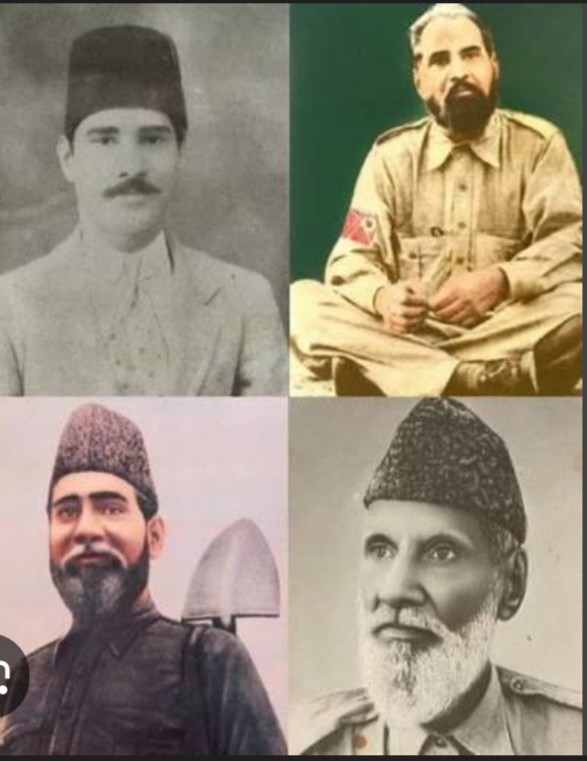
By Zafar Iqbal Jatoi
In the intellectual history of the Subcontinent, Allama Inayatullah Khan Al-Mashriqi emerges as a rare genius who proved his extraordinary abilities in the fields of knowledge, politics, and religion alike. His personality was not confined to that of a thinker or reformer; rather, he appeared as a man who shaped an era.
In the academic institutions of the West, he attained distinctions through his intellect and hard work that only a few have achieved. The University of Cambridge honored him with the highest academic distinctions, including Senior Wrangler, Foundation Scholar, and Bachelor Scholar—an acknowledgment that a young Indian Muslim had established his intellectual supremacy in Europe’s scholarly circles. Prestigious academic societies in England nominated him as a Fellow, while the Geographical Society of France and the International Congress of Orientalists also recognized his scholarly greatness.
His monumental work Tazkirah was regarded as one of the significant intellectual contributions of the twentieth century, and lectures on it were delivered in European universities. When the scientist Albert Einstein, the originator of the theory of relativity and atomic theory, acknowledged his intellectual depth, it was not mere formal praise but genuine admiration from one brilliant mind to another.
It was considered a sign of his global stature when the powerful German political leader Adolf Hitler stepped out of his room to receive him. His participation in the Motamar Khilafat-e-Islamia Conference in Cairo and his presidency of the World Religions Conference in Indore established him as a prominent figure in international religious and intellectual dialogue. The Rector of Al-Azhar University in Egypt formally conferred upon him the title of “Allama,” publicly affirming his scholarly rank.
Leaders such as Sheikh Ahmed Al-Senussi of the Senussi Movement in Tripoli and Maulana Ubaidullah Sindhi, leader of the Silk Letter Movement, described his movement as a ray of hope. This reflected that his Khaksar Movement was not merely a political organization but was regarded as a struggle for the revival of Islam. The association of General Nuri Bey, linked to the family of the Balkan War hero Enver Pasha, also gave his movement international recognition.
Al-Mashriqi’s life stands as testimony to the fact that when knowledge, conviction, and action unite, an individual can alter the course of history. He called upon Muslims toward selfhood, discipline, and action, shaping a narrative that still invites research and reflection today. No matter how much is written about him, it seems insufficient for he was not merely a man, but the embodiment of an era.
