

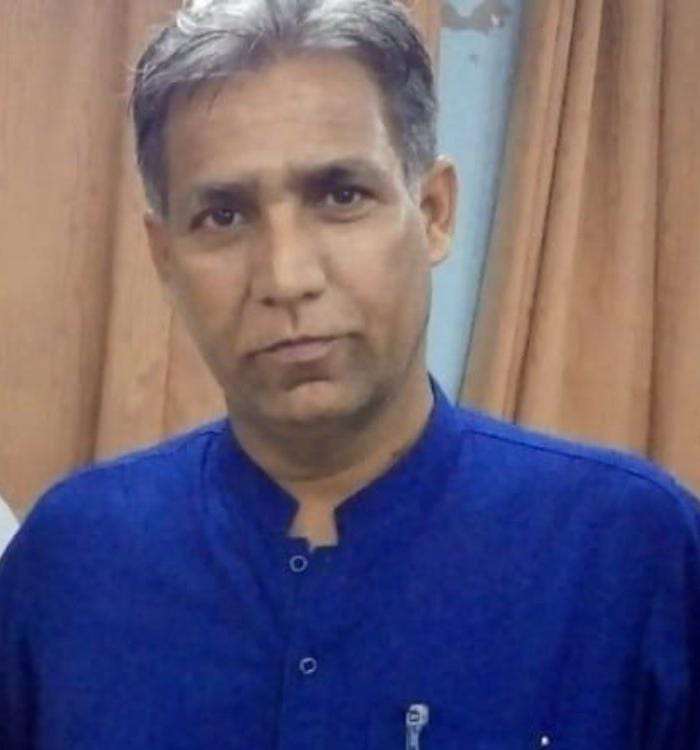
Rahmatullah Buriro
In the context of state stability, institutional maturity and parliamentary continuity
In the political evolution of states, “revolution” and “change” are two such terms that are often associated with emotional sloganeering, but in serious political analysis, their meaning is much broader and deeper. A popular revolution does not always have to be a massive upheaval of power. In many successful states, this change has come through constitutional reforms, institutional strengthening and political compromise. In a multifaceted society like Pakistan, where economic pressures, the aspirations of a young population and the effects of global political changes coexist, the need for change is a matter of serious national debate.
The aim of the establishment of Pakistan was not simply to establish a geographical state, but to build a political and social system based on the rule of law, equality and social justice. Over time, political instability, martial law periods and institutional weaknesses repeatedly tested this dream. In this context, the question of popular change arises. Does change mean the destruction of the system or the reform of the system?
Change versus chaos.
History shows that those nations advance that link change with institutional continuity. If change weakens the state structure, it becomes chaos rather than revolution. The maintenance of democratic continuity in Pakistan over the past two decades is an important milestone in itself. Elected parliaments have completed their terms, amendments have been made to the constitution, and examples of reconciliation between political forces have also emerged. The political role of the current President of Pakistan, Asif Ali Zardari, is worth mentioning here. As a politician and former president, even now, as the President of Pakistan, he has adopted this “politics of reconciliation” as a strategy. The 18th Constitutional Amendment expanded provincial autonomy, which was and is an important step towards strengthening the federal structure. This amendment was not just a political achievement, but a step towards restoring state balance.
Parliamentary Struggle and Representation.
The foundation of popular change lies in parliamentary representation. When the people’s vote influences policy-making, change becomes sustainable. The struggle for parliamentary supremacy is not new in Pakistan. Political parties, especially the Pakistan Peoples Party, have made great sacrifices for the continuity of parliamentary democracy.
Asif Ali Zardari’s political journey also went through prisons, political pressure and difficult circumstances, but instead of deviating from the parliamentary system, he emphasized its strengthening. This attitude suggests that the real path to change should be taken within the institutional framework.
Institutional maturity: The main pillar of the state.
The strength of states does not lie in individuals, but in institutions. A strong parliament, an independent judiciary, a professional bureaucracy and a responsive accountability system together ensure national stability. The role of Pakistan’s judicial system, especially the Supreme Court of Pakistan, and parliamentary committees has been important in this regard.
A popular revolution becomes necessary when institutions fall short of public expectations. But if institutions are reformed with transparency, efficiency, and accountability, the process of change can be peaceful and constructive.
Economic justice and social development.
The biggest reason for the need for change is economic inequality. Inflation, unemployment and unfair distribution of resources give rise to public unrest. It is the responsibility of the state to give a direction to economic policies that can bring employment to the youth, business facilities and agricultural reforms.
In this regard, forums like parliamentary debate and the National Fiscal Award strengthen federal unity. Along with provincial autonomy, activating local governments is also an essential part of public change.
Political reconciliation versus confrontation.
Pakistan’s political history shows that confrontation often results in uncertainty. On the contrary, political reconciliation paves the way for stability. In Asif Ali Zardari’s politics, reconciliation has been central. Be it legislation in parliament or communication between political parties.
Democratic continuity does not mean that differences disappear; but resolving differences within the constitutional framework is the real change. When political leadership speaks of strengthening institutions rather than weakening them, the structure of the state becomes stable.
The result is a conscious path to change.
A popular revolution or change is necessary when there is a significant gap between the expectations of the people and the performance of governance. But in a nuclear power and a multi-ethnic society like Pakistan, the path to change must be linked to constitutional, parliamentary and institutional continuity. The strength of states lies in their institutional maturity and public trust, more than in their military or economic resources. If the process of change restores this trust, promotes political understanding and prioritizes public service, then it becomes not a revolution but an evolution, and evolution is the guarantee of sustainable development of any nation. In the past 15 years, the parliamentary continuity of public representation and the public representation of elected governments, which indicates the flexible role of a political genius, also includes it. If Asif Ali Zardari, who is also the current President of the country, is named as such a flexible political figure, it will not be wrong. The PPP and its leadership, which have a history of public representation and political and even democratic struggle, have always believed in public service and have made sacrifices for parliamentary struggle, public government and political style of government. In the current circumstances, the leadership of the PPP, led by President Asif Ali Zardari and Chairman PPP Bilawal Bhutto Zardari, are playing a better role. This flexible role is due to politics, public representation, democratic traditions, parliamentary role and public You cannot exclude government representation.
