

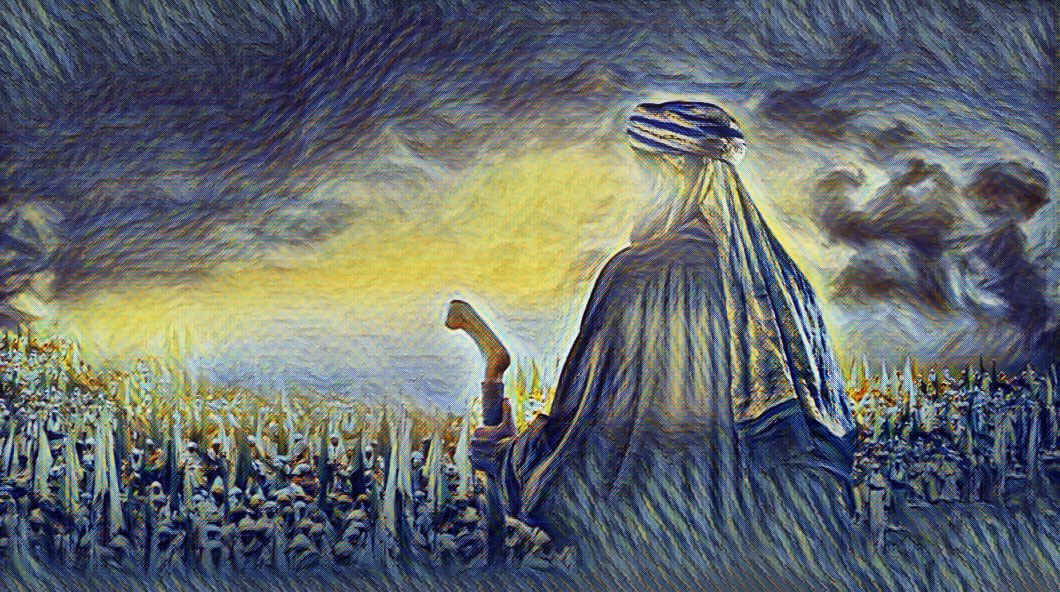
An Icon of Justice, Simplicity, and Power Guided by Faith

By Muhammad Mohsin Iqbal
A Legacy of Justice and Servitude
Hazrat Umar Farooq (RA), the second Caliph of Islam, stands among the most iconic and inspiring leaders in human history. His life was a model of courage, humility, devotion, and justice—values that not only defined his personality but shaped the destiny of the Islamic empire.
The Prophet Muhammad (PBUH) once said:
“If there were to be a Prophet after me, it would have been Umar.” (Tirmidhi, Hadith 3686)
This profound statement is a testament to Hazrat Umar’s spiritual and moral stature. Among the Ashra Mubashra—the ten companions promised Paradise—he held a unique place in the Prophet’s trust and the early Muslim community’s strength.
A Turning Point in Early Islam
Hazrat Umar’s (RA) conversion was a moment of immense empowerment for the persecuted Muslims in Makkah. His fearless public declaration of faith emboldened believers and marked the beginning of a new chapter—one where Muslims could pray openly at the Kaaba.
The Qur’anic verse aptly captures his essence:
“Muhammad is the Messenger of Allah. And those who are with him are strong against the disbelievers and merciful among themselves…” (Surah Al-Fath 48:29)
Leadership Rooted in Accountability
Following the demise of Hazrat Abu Bakr Siddiq (RA), Hazrat Umar (RA) assumed leadership with a sense of immense accountability to Allah. His governance brought with it a wave of administrative reforms, military victories, and legal structures that laid the foundation of Islamic statecraft.
Key contributions of his caliphate include:
-
Introduction of the Hijri calendar
-
Establishment of the Diwan (state register)
-
Formation of Bait-ul-Mal (public treasury)
-
Creation of pensions, public roads, and canals
-
Appointment of judges and governors under strict accountability
-
Protection of non-Muslims’ rights and religious freedoms
Despite these achievements, he lived a life of simplicity—wearing coarse clothing, eating modest meals, and remaining accessible to the common people.
The Caliph Who Walked at Night
One of the most powerful aspects of Hazrat Umar’s leadership was his habit of walking the streets of Madinah at night in disguise, checking on his people. It was during these unannounced visits that he discovered injustices, hunger, or neglect—and swiftly addressed them.
This was not symbolic; it was active leadership in its purest form.
Justice and Divine Endorsement
Hazrat Umar’s opinions often coincided with divine revelation. The Prophet (PBUH) is reported to have said:
“Indeed, Allah has placed truth upon Umar’s tongue and heart.” (Ibn Majah, Hadith 106)
Examples of Qur’anic revelations aligning with his views include:
-
The prisoners of Badr
-
The commandment of hijab
-
The prohibition of wine
A Model for Contemporary Muslim Leadership
As the Muslim world today faces deep crises—political, economic, and moral—the example of Hazrat Umar (RA) serves as a timeless guide. He was a leader who combined faith with pragmatism, power with humility, and authority with service.
“Indeed, Allah commands you to render trusts to whom they are due and when you judge between people to judge with justice.” (Surah An-Nisa, 4:58)
Today’s rulers can find in him a blueprint for leadership grounded in divine responsibility and public service.
Martyrdom and Eternal Honour
On the 1st of Muharram, Hazrat Umar (RA) was martyred while leading the Fajr prayer. Even in his final moments, he was concerned not with vengeance but with justice and the peaceful succession of leadership. His burial beside the Holy Prophet (PBUH) and Hazrat Abu Bakr (RA) in Masjid-e-Nabawi is symbolic of his closeness—in life and death—to the Prophet.
Conclusion: Leadership of the Heart and Deed
Hazrat Umar (RA) was more than a caliph; he was a servant-leader, a builder of nations, and a beacon of justice. As the modern world seeks leadership with integrity, his example offers more than inspiration—it offers solutions. A world led by values such as his would be more just, compassionate, and united.
Let us not relegate his life to the pages of history, but revive his principles in practice. His footsteps in the night were not only sounds of service—they were echoes of a just state, truly for the people and truly under God.
