

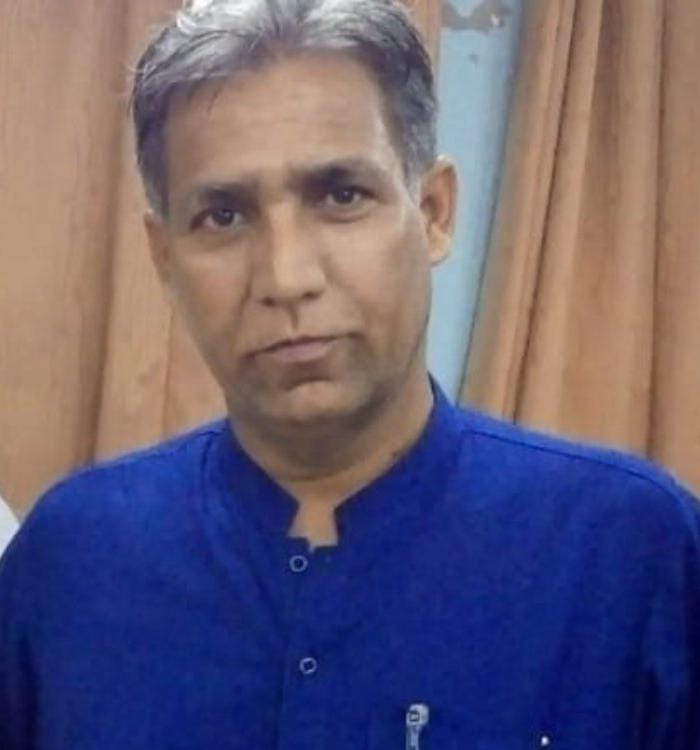
Rahmatullah Buriro
Only the responsible can understand the power of the pen better or against whom the pen is used. Even the kings and rich people of the world cannot bear the blows of the pen. Recently, a conference of Commonwealth members was held in Barbados, in which the staff and members of the assembly participated under the leadership of the Speaker and Secretary of the Sindh Assembly, Umar Farooq Buriro. The aim of the Barbados conference was to establish the impression of a better and more transparent government. By playing a better role through public representation, the assemblies should have better public and institutional oversight and, in view of the needs of the present era, the assembly members, from the Public Accounts Committee to the parliamentary committees or standing committees, were emphasized to give the impression of public representation and accountability. Recently, there have been reports in some media that the Public Accounts Committee established by the Sindh Assembly has not been able to work with the legal and institutional spirit that it should have. Before that, these reports are also testimonies of record time and space that PAC meetings were not held at all during the last three-term assembly, if they were held, then they were only meeting without aims. Now the question arises that if PAC has been so active under the chairmanship of Nisar Ahmed Khorro, no better report could be made public on establishing financial transparency?! If PAC has really worked on a better performance basis under the leadership of the current head and administrators, then this public report could not be made public. Such performance public reports should be and be kept on the assembly website. Should these reports and the impression of better financial transparency and institutional accountability also be visible in the institutions? The impression from the institutions should be visible at the public level as well.? All these questions are standing in front of us like question marks, demanding answers. In the language of the common market, from workers to clerks, from Karachi to Kashmir, they The facts are clear that the Local Government Department has incurred a cost of Rs 50,000 to Rs 75,000 per Union Council for not being able to respond to the audit fee, and the talk of a deal of over Rs 100,000 per Town Committee is now the talk of the market. Why are these words and the language of the market part of the discussion? Shouldn’t the PAC leaders themselves be responsible for paying for them? Beyond a certain limit, the usual discussion of the common hotels and officers of the civil judge of Sukkur district, Rohri, and the clerks’ chambers, came that 30 thousand per union council was taken from the union council for the invitation of a guest. These and many other such things are now being made public like a bargain sought in the Khushi Bazaar jo sodhu. When an analysis is made, the results that should be achieved, at least in Sindh, are not seen.
In this regard, a few things are given below, on the basis of which better performance can be achieved in the future if action is taken.
Advice on financial transparency and institutional reforms.
The main objective of the Public Accounts Committee is to ensure transparent, responsible and effective use of provincial financial resources. For this purpose, the following important suggestions are made: For example, a systematic schedule for timely review of audit reports: Regular and timely meetings should be scheduled on audit reports of all departments so that old files do not accumulate and financial accountability is maintained. Recovery and follow-up mechanism: In cases where irregularities are identified, a fixed time and a responsible officer should be appointed for immediate follow-up and recovery. Making institutions partners, not harassers: The audit process should be made a means of improvement instead of punishment. Problems should be solved together with institutions in a cooperative manner. Digital audit tracking system: An online tracking system should be introduced to monitor audit parameters, decisions and implementation through modern technology. Capacity Building: Training sessions on financial regulations, audit methods and transparency should be organized for committee members and relevant officers. Public Access to Public Accounts Reports: Annual reports should be published publicly to convey the message of transparency, accountability and good governance. The result is frequent meetings, unnecessary pressure on the audit committee and late submission of reports, which shows administrative weakness. For better governance, it is necessary for the committee to play a reformative, not just an accountability, role. As a new chapter of trust, transparency and efficiency in institutions is opened. Therefore, it will be better to consider the above issues and see the performance.
