
A ‘Sweet Bond’ on the Silk Road: Hami Melons Unite China and Central Asia Through Culture and Trade

Independent Report
Islamabad, Oct 16, :
In the heart of the ancient Silk Road, Hami, located in the eastern part of northwest China’s Xinjiang Uygur Autonomous Region, continues to symbolize sweetness and connection. Known as the “gateway to the Western Regions,” Hami was once a vital hub for caravans and cultural exchanges — and today, it celebrates its legacy through a thriving melon industry that bridges borders and cultures.
Dating back to the Western Han Dynasty (202 BC–25 AD), Hami served as a key stop on Zhang Qian’s historic diplomatic mission to the West. The Silk Road he pioneered not only enabled trade and cultural exchange but also gave birth to a shared symbol of sweetness — the Hami melon, a fruit that became synonymous with the region’s prosperity and hospitality.
Each year, the Hami Melon Festival transforms the city into a celebration of color, flavor, and tradition. Interestingly, the city of Khiva in Uzbekistan — another Silk Road landmark — hosts a similar melon festival, creating a “sweet bond” that transcends borders and unites communities through shared agricultural heritage.
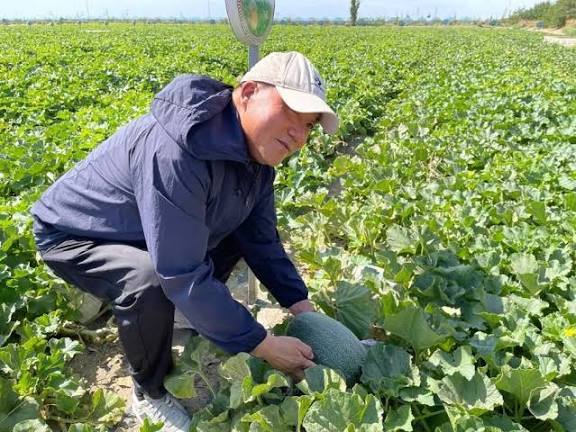
This summer, in Huayuan Township, workers from the Jiaxiang Fruit Planting Cooperative harvested, sorted, and packed tons of fresh Hami melons for shipment across China and abroad.
> “This year, we’ve already exported 1,880 tons of Hami melons, with peak daily exports exceeding 80 tons,” said Liu Ruixiang, head of the cooperative.
Hami’s unique continental climate, abundant sunshine, and sharp temperature differences between day and night give its melons their famed sweetness. Strong daytime photosynthesis helps the fruit store nutrients, while cool nights slow sugar consumption — a natural process that produces the signature flavor known worldwide.
Historically, the Hami melon’s journey mirrors that of the Silk Road itself. As grapes, pomegranates, and alfalfa traveled eastward from Central Asia, Hami’s cultivation techniques spread west to Dunhuang in Gansu province and beyond.
Today, Hami melons are not just a fruit — they represent a pillar industry driving regional economic growth. Collaborative research with Tajikistan and Kyrgyzstan has led to new melon breeding initiatives and the exchange of germplasm resources to enhance genetic diversity.
At the 19th Hami Melon Festival, over 270 melon varieties — ancient and modern — were showcased, drawing massive crowds of tourists and traders. The festival, launched in 1993, has evolved into Hami’s most iconic “sweet celebration,” blending culture, commerce, and international friendship.
Cultural vibrancy continues to enrich Hami’s story. At the 7th China Xinjiang International Ethnic Dance Festival, Tajikistan’s “Lola” Song and Dance Ensemble performed in traditional attire, earning applause and reinforcing the idea that “art knows no borders.”
Tourism too has flourished — in the first half of 2025 alone, Hami welcomed 9.85 million visitors, marking a 16.46% increase year-on-year, with tourism revenue rising by 23.22% to reach 6.379 billion yuan.
> “The fruits here are just as sweet as those from my hometown,” said Asadbek Bobojonov, Deputy Editor-in-Chief of Uzbekistan’s Silk Road News Network, who joined journalists from Pakistan, Kyrgyzstan, and other countries for a field visit earlier this year.
For Central Asian cultures, melons symbolize abundance, hospitality, and national pride — a sentiment shared across borders. As Bobojonov noted, “Both Hami and Uzbekistan share deep historical ties through the Silk Road. Their melon festivals can serve as powerful platforms for cooperation and cultural exchange.”
Wang Lin, from Hami’s Yizhou District Publicity Department, echoed this sentiment, calling the melon festivals “a vivid reflection of cultural affinity between China and its neighbors.”
Indeed, what began as a trade route thousands of years ago has evolved into a network of friendship and shared prosperity. Today, under the Belt and Road Initiative (BRI), the Hami melon continues to symbolize the enduring “sweet bond” linking the people of China and Central Asia through culture, commerce, and cooperation.
