
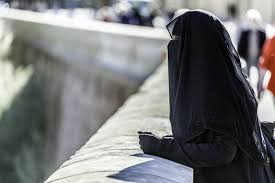
A woman in Islam is a dignified and honorable creation of Allah, endowed with intellect,
faith, and moral strength. She is spiritually equal to men and capable of earning Allah’s
reward through her deeds, knowledge and character. Islam recognizes her rights to
education, property, work, and social participation, while also honoring her role as a
mother, daughter, sister, and contributor to society.
Her value does not lie only in outer beauty but in wisdom, piety, compassion, and her
ability to nurture and lead. She embodies strength, dignity, and grace, serving as a
cornerstone of family, community, and faith.
Rights of Women in Islam
Personal Rights
Islam granted women the right to live, and female infanticide was abolished (Surah AtTakwir, 81:8–9).
Family and Marriage Rights
Women have the right to consent in marriage, and Islam forbids forced marriage. Mehr is
a mandatory gift, financial maintenance is required, and a husband must provide basic
needs. If he has more than one wife, justice in treatment is obligatory.
Right to Divorce
If a husband refuses to give divorce, a woman can free herself through khula. The first
khula in Islamic history was processed through Prophet Muhammad (PBUH).
Education Rights
Hazrat Aisha bint Abu Bakr (R.A) was the greatest inheritor of Islamic knowledge after the
Prophet. She was one of the greatest scholars of Islam.
Economic Rights
Women have rights to buy, own, sell and manage property, inherit property, and earn
lawfully. Whatever a woman earns is hers alone. Islam recommends women to focus on
home, but if she chooses to work, she may do so. Hazrat Khadija (R.A) was among the
most successful merchants of Quraysh and was known as Tahira, meaning pure woman.
Social Rights
A woman has the right to kindness, to visit relatives, and to maintain kinship ties.
Legal and Political Rights
Women have the right to testify in financial contracts, vote for leaders, participate in
decision making, and seek justice in court. Even during early Islam, women’s opinions
were accepted in matters of governance.
Challenges in Society
However, in many parts of the world, including some Pashtun communities, women face
inequality and oppression. Tradition, customs, social restrictions, and patriarchal
systems often limit access to education, healthcare, employment, and decision-making.
Despite their potential, women are prevented from exercising their legal and human
rights.
In Pashtun society, cultural norms sometimes excessively restrict women’s mobility,
voice, and participation in public life. Practices like forced marriage, limited inheritance
rights, and restrictions on education keep women marginalized and dependent.
Many believe education makes women liberal, yet Islam clearly made knowledge
mandatory for every man and woman. Sadly, many women remain deprived of education,
even though Islam encourages learning.
When we look at Hazrat Aisha (R.A), she was intelligent, wise, and bold. The Prophet
(PBUH) praised her intellect, her memory, and she narrated more than two thousand
hadith after his passing. She was married to the Prophet at a young age so she could
preserve his teachings and convey his life and sunnah to future generations. If it was not
for her, much Islamic knowledge would have been lost. She became one of the most
brilliant teachers in Islamic history, proving that Islam honors women greatly.
Cultural Distortion, Not Islam
Islam made men the muhafiz of women—meaning protector and provider. Today,
however, some men pressure women to provide financially, although it is not their
responsibility. Islam clearly states provision is the duty of men.
In many Pashtun families, women are not given their rightful share of inheritance. When
women ask for property, they are threatened, shamed, and forced to surrender their
rights, while men control family wealth.
Such practices are not Islam. They are a cultural distortion that perpetuates injustice and
inequality, creating a cycle of oppression across generations and leading to serious
consequences.
Conclusion
Islam granted women dignity, honor, protection, education, and rights long before any
modern system recognized them. The challenges women face today are cultural, not
Islamic. Understanding true Islam allows women to reclaim their rightful status with
pride, strength, and confidence, as Islam intended.
Bibi Khadijah
Quetta

