

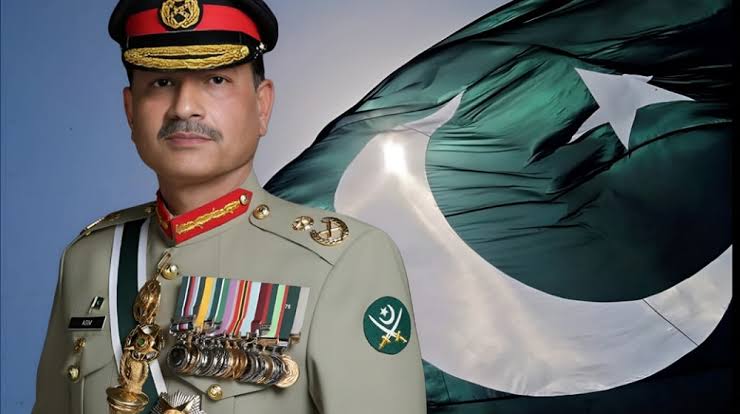
During a recent visit to Libya, Pakistan’s Field Marshal addressed a high-level gathering comprising senior Libyan leadership and military officials. His remarks reflected Pakistan’s long-standing strategic experience shaped by decades of conflict, sanctions, and external pressure. He emphasized that excessive dependence on foreign military technology can pose serious challenges when a nation faces critical security threats. In such situations, supplier states may delay or restrict spare parts, technical support, or system updates, thereby limiting operational readiness at crucial moments.
Drawing from Pakistan’s own journey, he highlighted the country’s sustained efforts to develop indigenous capabilities across air defence, land and naval warfare, cyber and electronic domains, and secure communications. This evolution, he noted, was driven by necessity rather than choice, and required long-term commitment and resilience.
He explained that these systems have been tested under demanding operational conditions, demonstrating the value of integrated defence planning and indigenous innovation. According to Pakistani assessments, the experience reinforced confidence in locally developed platforms and validated the importance of self-reliance in modern warfare.
Beyond recounting Pakistan’s experience, the Field Marshal conveyed a broader strategic perspective relevant to other Muslim countries. He indicated that Pakistan is prepared to share its technological expertise, operational knowledge, and capacity-building experience with interested states seeking greater strategic autonomy and credible deterrence. The emphasis, he stressed, is on cooperation based on mutual respect rather than dependency or political leverage.
He underscored that strong and capable armed forces are essential for safeguarding sovereignty, dignity, and national independence. Without such capacity, true strategic autonomy remains difficult to achieve.
In a wider regional context, the address reflected ongoing debates within the Muslim world regarding security arrangements and external defence dependencies. Recent regional conflicts have prompted several states to reassess the effectiveness and priorities of existing security frameworks, encouraging discussions on indigenous and collaborative solutions.
Pakistan’s evolving defence capabilities, combined with its operational experience, offer one possible model for cooperation. Joint development, knowledge sharing, and localized production could help reduce external vulnerabilities, eliminate crisis-time constraints, and strengthen long-term stability. Such cooperation would also support Pakistan’s own economic and strategic objectives through defence exports and industrial growth.
The Field Marshal acknowledged that transitioning away from established defence ecosystems would be challenging due to existing commitments and geopolitical realities. However, he emphasized that strategic independence is a gradual process that begins with deliberate and informed choices.
Overall, the message was not a declaration of confrontation, but an articulation of a doctrine centered on self-reliance, cooperation, and sovereignty. It reflects Pakistan’s belief that sustainable security is best achieved through indigenous capacity, trusted partnerships, and preparedness rooted in real-world experience.
