

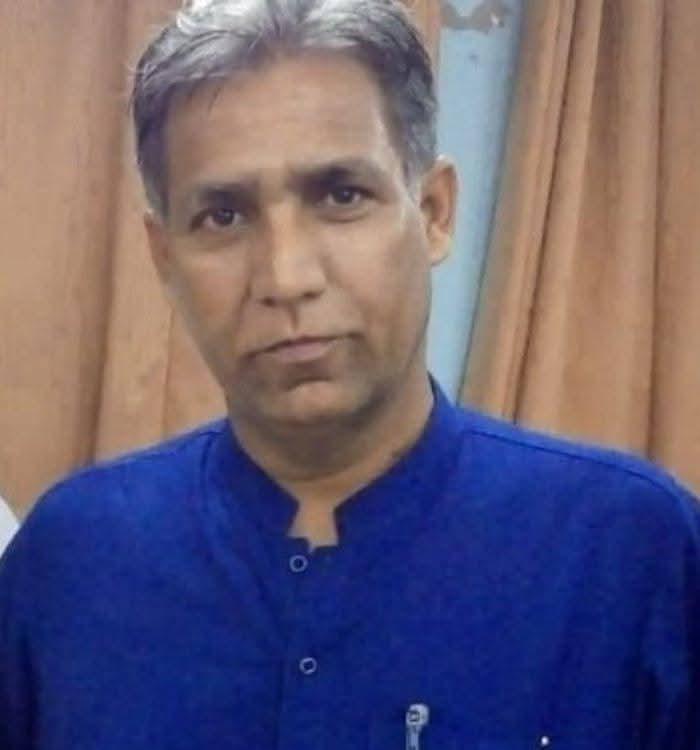
Rahmatullah Buriro
Sukkur city has been an important part of the historical, cultural, commercial and many other aspects of Sindh. Sukkur holds its importance in the trade of Sindh, agriculture and irrigation system.Today, apart from the introduction of Sukkur Barrage, we also share information on the introduction,
importance and characteristics of two bridges built on the River Indus at a distance of two kilometers from Sukkur Barrage.
Based on this information, some suggestions are made considering the importance. Because in the current situation, due to the lack of timely cleaning, mechanical, technical and electrical repairs of the bridges, many questions arise on the importance of the bridges, which are no less than the importance of any national question.
Introduction to Lansdowne Bridge.
1. Lansdowne Bridge – Sukkur
Historical Background
Lansdowne Bridge is a masterpiece of British-era engineering, completed in 1889. This bridge connects Sukkur and Rohri on the Indus River. The bridge was named after the then Viceroy of India, Lord Lansdowne.
Technical and Mechanical Structure.
The bridge is based on a steel cantilever arch design. The total length of the bridge is about 790 feet.
The central span is about 330 feet, which was considered one of the largest spans in the world at that time.
The bridge is built on a completely riveted steel structure.
The bridge was designed in such a way that it could withstand high currents, floods and river pressure.
Structural Features.
Arch standing on the central part of the piers. During that period, the steel arch was built in the middle of the river without scaffolding. It is a great example of balance and load distribution in engineering.
Significance.
The foundation of modern bridge engineering in the subcontinent,
A revolution in trade, railways and communication.
An important symbol of Sindh’s identity and heritage.
Even today, it is preserved as a historical heritage and a tourist attraction.
2. Ayub Bridge – Sukkur
Historical Background
Ayub Bridge was built in 1962 and named after Field Marshal Ayub Khan, the President of Pakistan. This bridge was built specifically to reduce the increasing railway load on Lansdowne Bridge.
Technical and Mechanical Structure.
This bridge is based on the Steel Arch Truss design,
The length of the bridge is approximately 1,000 feet.
The central arch is about 506 feet, which is considered the longest arch for a railway in Pakistan. The bridge was designed specifically for railway traffic.
Structural features.
Use of high strength steel. Capable of withstanding heavy railway loads, engines and freight cars,
Modern mechanical and structural design plays its role.
Importance.
These bridges play the role of the backbone of Pakistan’s railway system. Helping to preserve the Lansdowne Bridge, a symbol of engineering progress at the national level, is still in use for railway traffic today.
Lansdowne Bridge is a symbol of historical and technical greatness of the British era, while Ayub Bridge is an example of modern engineering of the Pakistani era. The two bridges together not only connect Sukkur and Rohri, but also reflect the history, development of Sindh and the human struggle with the Indus River.
Being a resident of Sukkur, it is painful to see the poor condition of these bridges every day. For example, after the High Court took notice of the deteriorated condition of the footpath of the Lansdowne Bridge, some work has been done, and some is being done. The main road of the Lansdowne Bridge is also in a poor condition. There are plates on the joints of the bridge every 20 to 30 square feet, but the road is broken from there, the plates have disappeared. In this weak condition, the bridge structure suffers a lot. The supporting rods of the anglers attached to the footpath of the bridge have also broken at many places. The Irrigation Department, Pakistan Railway Department, District Government, Sindh Government or any department of the federal government do not pay any attention to this national heritage like a world wonder. In such a way, looking at the condition of the Ayub Bridge alone, it can be said that the above-mentioned federal and Which department of the provincial or Sukkur district government is responsible? It is also not clear. For the past two years, Advocate Sohail Memon, who is also a resident of Rohri, had filed a case regarding the dilapidated condition of the bridge, in which case or as a result of the High Court decision, the Department of Antiquities and Antiquities is carrying out the work, which is a tribute. Apart from this work, apart from painting the footpath and the footpath, who will take care of all the mechanical and technical work of the bridge? Who will look after the weak parts of the bridge? Who is responsible for their repair and its check and balance? Given the national importance of the two important bridges, the responsible institutions should play a significant role. It is our duty to give importance to these national heritages, these important bridges, river crossings, and the names that play a role in the historical and urban importance of the cities. The Commissioner of Sukkur, the Deputy Commissioner of Sukkur, the DS of Railway Sukkur, the Chief Engineer of Sukkur Barrage, the District Chairman of Sukkur Syed Kamil Shah, the public representatives of Sukkur Syed Khursheed Ahmed Shah, Syed Nasir Hussain Shah, Syed Owais Qadir Shah and all the MNAs, MPAs and the Mayor of Sukkur should own these national heritages located on the Indus River. These national assets are not only our local beauty but also their importance is global.
