

Independent report
Special Report by Muhammad Zeb Investigative Journalist, PIHRO | Correspondent, Crime Reporter, Daily Independent |
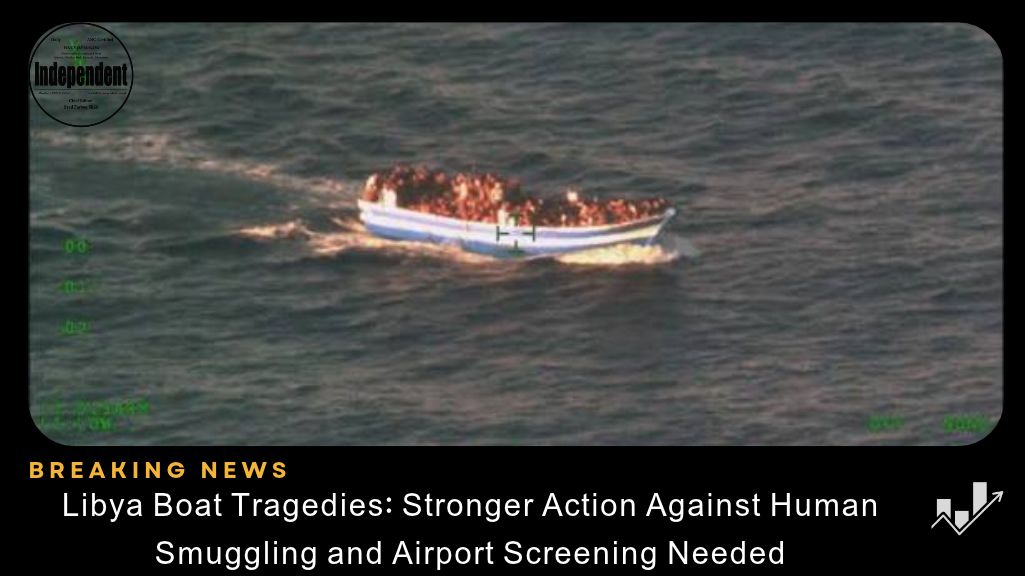
The repeated deaths of Pakistani nationals in boat tragedies off the Libyan coast are not merely maritime accidents. They reflect a serious national challenge involving human smuggling networks, irregular migration and the exploitation of young people seeking better economic opportunities abroad.
The tragedies have highlighted the need for a comprehensive response that combines effective law enforcement, stronger airport screening, public awareness, international cooperation and measures to prevent vulnerable citizens from being lured into dangerous journeys before they leave Pakistan.
According to figures attributed to official records and reports, more than 335 Pakistanis have died in seven major boat disasters since 2023. These figures underline the scale of the human loss and the urgency of strengthening preventive measures against illegal migration networks.
Zawiya and Harawa tragedies leave families devastated
On February 11, 2025, a boat tragedy near Marsa Dela off the coast of Zawiya, Libya, resulted in the confirmed deaths of 16 Pakistani nationals. Thirty-seven people survived, while around 10 Pakistanis were reported missing.
Most of the deceased were reportedly from different districts of Khyber Pakhtunkhwa, including Kurram, Bajaur, Orakzai and Peshawar. Their families faced immense emotional distress following the deaths and disappearance of their loved ones.
On April 15, 2025, another incident near the Harawa coast of Sirte resulted in the recovery of 11 bodies. Four victims were identified as Pakistani nationals: Zahid Mehmood, son of Liaqat Ali, from Gujranwala; Sameer Ali, son of Raja Abdul Qadeer; Syed Ali Hussain, son of Shafqat ul Hussnain; and Asif Ali, son of Nazar Muhammad, from Mandi Bahauddin.
The incidents left families struggling with identification procedures, the repatriation of bodies and uncertainty over missing relatives.
How human smugglers exploit vulnerable young people
Human smuggling networks often lure young people with promises of employment, prosperity and a better future in Europe. In many cases, families are reportedly charged millions of rupees for journeys that are presented as safe and guaranteed.
The reality is often dangerous and deceptive. Migrants may be placed on overcrowded and unseaworthy boats with inadequate safety equipment and little or no emergency support.
For financial gain, smugglers expose vulnerable people to life-threatening conditions. Some victims are reportedly deceived about the route, travel arrangements or legal status of their journey, while their documents may be misused.
Human smuggling is not simply a violation of immigration laws. It is a serious abuse of human dignity and a threat to the lives and fundamental rights of those being exploited.
FIA action and the need to dismantle trafficking networks
The Federal Investigation Agency has reported arrests, investigations and disciplinary action in various cases involving human smuggling. The reported arrest of individuals allegedly linked to an international smuggling network in Bajaur is among the actions taken against such networks.
However, investigations must go beyond local facilitators and focus on the organisers, financial operators, overseas contacts and channels through which illegal proceeds are transferred.
Effective enforcement requires transparent investigations, evidence-based prosecution and due process. Those found guilty should face the penalties prescribed by law, while individuals should not be subjected to action without credible evidence.
Stronger airport screening to prevent dangerous journeys
One of the most important measures against human smuggling is to identify and prevent dangerous and illegal journeys before migrants depart from Pakistan.
The federal government, Ministry of Interior, FIA and other relevant authorities should strengthen passenger screening at international airports, particularly where travel arrangements, documentation or recruitment practices indicate a possible risk of human smuggling.
The following measures could help improve prevention:
Introduce more effective risk-based screening at international airports.
Verify suspicious travel arrangements, forged documents and tickets or visas obtained through illegal agents.
Conduct appropriate and respectful interviews with passengers where there are credible indicators of exploitation or smuggling.
Where legally actionable evidence exists, take steps under the relevant laws to prevent departure and initiate further investigation.
Strengthen verification of employment visas, overseas job contracts and recruitment agencies.
Establish dedicated information and assistance desks at airports to guide prospective migrant workers towards legitimate government channels.
These measures should help prevent smugglers from deceiving young people and sending them on dangerous routes. At the same time, lawful travellers should not be subjected to arbitrary restrictions. Any intervention should be based on credible evidence, risk assessment and applicable legal procedures.
### Strict legal action against human smugglers
Action against human smuggling should not be limited to arrests. Investigators must also examine the financial networks, properties, illegal proceeds and overseas connections of those involved.
The federal government and FIA should strengthen specialised investigation teams, improve prosecution support and ensure that cases are pursued efficiently in accordance with the law.
Recruitment agents and facilitators who collect large sums from young people and send them through illegal routes must also be investigated and prosecuted where evidence establishes their involvement.
Assistance to affected families and search for missing persons
Following boat tragedies in Libya, families often face prolonged uncertainty regarding the identification of victims, information about missing relatives and the repatriation of bodies.
The Ministry of Foreign Affairs, Pakistan’s Embassy in Tripoli and relevant authorities should maintain an effective coordination system for affected families, providing timely and verified information about identification procedures, search efforts and repatriation arrangements.
Cooperation with Libya and other relevant countries should be strengthened to facilitate the search for missing Pakistanis and the identification of recovered bodies.
Employment opportunities and public awareness
Preventing human smuggling requires more than law enforcement. Economic and social measures are also essential.
Young people in districts such as Bajaur, Kurram, Orakzai, Peshawar, Gujranwala and Mandi Bahauddin need greater access to employment, vocational training and lawful overseas job opportunities.
The government should launch public awareness campaigns in local languages to explain the methods used by human smugglers, the dangers of illegal migration routes and the realities of travelling in overcrowded boats.
A national responsibility and a human rights imperative
The deaths of Pakistani nationals in Libya’s boat tragedies represent a national human tragedy. Young lives have been lost after being exposed to false promises, illegal networks and dangerous travel arrangements.
Human smuggling must be treated as a national priority. Preventive action should protect young people before they embark on illegal journeys, while those responsible for exploiting them must face firm and lawful action.
Human smuggling is not merely an immigration issue. It is a matter of human rights, dignity and the protection of life.
The government, law enforcement agencies, diplomatic missions and society must work together to ensure that Pakistani youth are no longer lured into deadly migration routes in search of a better future.
