
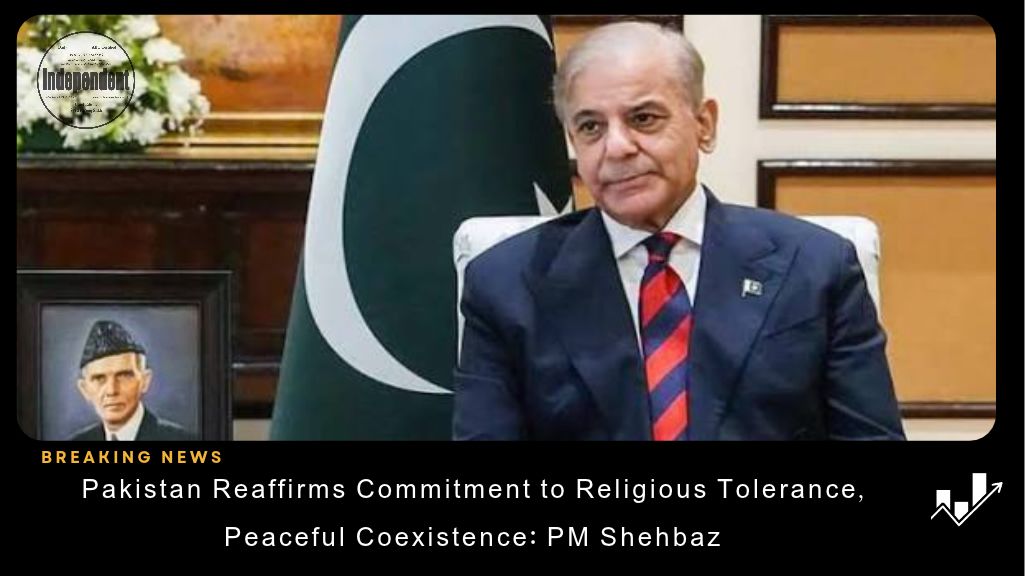
Pakistan Reaffirms Commitment to Religious Tolerance, Peaceful Coexistence: PM Shehbaz

Independent report
ISLAMABAD: Prime Minister Muhammad Shehbaz Sharif has reaffirmed Pakistan’s commitment to mutual respect, peaceful coexistence and the protection of human dignity, stressing that religious tolerance and interfaith harmony are essential for building a peaceful and inclusive society.
In his message on the International Day for Tolerance, observed on November 16, the prime minister said the true spirit of tolerance lay in respecting the beliefs, convictions and rights of others despite differences.
He said Islamic teachings provided enduring guidance on patience, tolerance, compassion, justice and respect for humanity. The life and teachings of the Holy Prophet Muhammad (Peace Be Upon Him) offered a timeless example of patience, forbearance and kindness towards others.
The prime minister said the Constitution of Pakistan guaranteed dignity, protection, equal opportunities and equality before the law to all citizens without discrimination on the basis of colour, religion or creed.
He observed that Pakistan’s diverse society, comprising different religions, traditions and cultures, could progress through mutual cooperation, understanding and tolerance. The country’s cultural, linguistic and religious diversity was a source of national strength and a valuable asset.
He said the government remained committed to promoting interfaith harmony and religious tolerance, protecting minorities and vulnerable segments of society, curbing hate speech and advancing human rights education and peace.
The prime minister described the enactment of the National Commission for Minority Rights Act, 2025, as an important step towards strengthening the legal framework for minority rights. He said translating these legal safeguards into effective institutional protection and ensuring meaningful access to justice remained among the government’s foremost priorities.
He emphasised that tolerance and forbearance were first instilled through upbringing at home, while educational institutions, places of worship and social circles played a vital role in promoting these values.
The prime minister called upon religious scholars, teachers, the media, civil society, public institutions and citizens, particularly young people, to reject prejudice, promote mutual understanding and play a constructive role in countering hatred and violence.
