

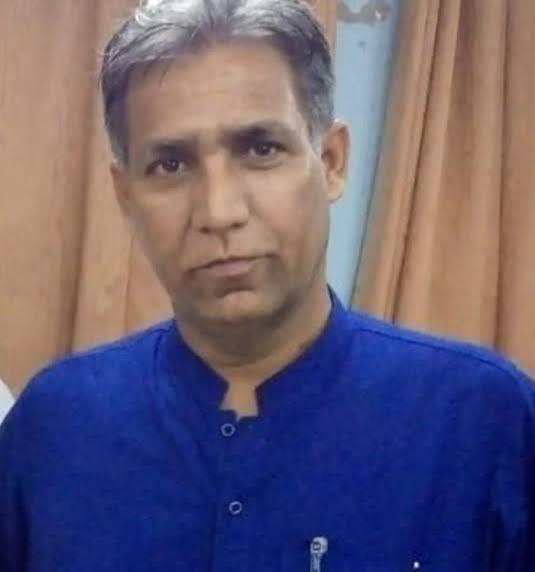
By Rahmatullah Buriro
In every country’s politics, there are leaders who merely react to events, and then there are those rare individuals who sense the political weather before the storm arrives. They do not judge a moment by its noise alone, but by its consequences—what it may mean tomorrow, next year and even a decade from now.
President Asif Ali Zardari belongs to the latter category.
His name is often associated primarily with the ceremonial office of the Presidency. Yet understanding Zardari requires looking beyond the office to a deeper aspect of Pakistan’s political culture: patience as strategy, reconciliation as a source of strength, and political survival as an art.
As the saying attributed to Machiavelli goes, “The wise man does in the beginning what the fool does in the end.” Zardari’s political career has often reflected the value of acting early, quietly and without seeking immediate applause.
In the current political climate, few issues are as sensitive as the debate over the creation of new provinces and administrative units. This is not merely an administrative question. In a federation such as Pakistan, it touches the sensitive matters of identity, history, provincial autonomy and national unity. In Sindh, in particular, the debate has generated strong public emotions and a deeply felt response.
It is precisely in such moments that Zardari’s political temperament becomes significant.
The debate is not simply about drawing new boundaries on a map. It is also about history, identity and collective memory. As Faiz Ahmed Faiz wrote:
Bol ke lab azaad hain tere,
Bol, zubaan ab tak teri hai.
Speak, for your lips are still free; speak, for your tongue is still your own.
The people of Sindh have expressed their concerns. In a democracy, when people speak, wise leadership does not dismiss their voices. It listens, understands and seeks to channel public sentiment into constructive dialogue.
That is why Bilawal Bhutto Zardari’s clear stance at the Karachi Press Club was more than a press interaction. It conveyed a political position with clarity and conviction. Similarly, Prime Minister Shehbaz Sharif’s visit to Aiwan-e-Sadr and his meeting with President Zardari carried significance beyond routine official engagement.
When national and provincial sensitivities come into conflict, the distance between institutions is not measured in kilometres. It is measured by the willingness of their leaders to communicate.
The subsequent developments were equally significant. After spending several days in Sindh, President Zardari travelled to Lahore and met Prime Minister Shehbaz Sharif at his residence. The meeting took place amid renewed debate over the creation of new provinces and the political sensitivities surrounding the issue.
The importance of such an engagement lies not in protocol, but in its political message.
In the formal world of state institutions, protocol has its place. Yet political leadership sometimes requires flexibility and a willingness to engage directly, regardless of convention. Zardari’s meeting with the prime minister at his residence reflected the importance of consultation at a time when political positions were becoming increasingly sensitive.
It recalled the familiar principle often associated with Bismarck that politics is the art of the possible. In practical terms, the possible sometimes requires humility, flexibility and a readiness to place national and political stability above personal or institutional ego.
This is not weakness. It is engagement.
The true test of leadership comes when positions harden, public emotions rise and political tensions threaten to overshadow reason. Anyone can lead when the political atmosphere is calm. Leadership is tested when disagreements become intense and the temptation to confront becomes stronger than the willingness to negotiate.
In such circumstances, confrontation may be easy, but conversation requires courage.
The prime minister’s subsequent consultations, discussions with political leaders, including Mian Nawaz Sharif, and efforts to discourage hostile exchanges among ministers can be viewed as part of a broader attempt to reduce political tensions. The atmosphere does not improve by itself. It improves when leaders choose dialogue over confrontation and restraint over rhetoric.
Another defining feature of Zardari’s politics has been his reluctance to turn political disagreement into permanent personal enmity. In a country where political rivalries have frequently become deeply entrenched, he has consistently advocated keeping channels of communication open.
His political journey—from opposition and imprisonment to the Presidency and back into the centre of national politics—has given him considerable experience of the consequences of confrontation and the value of reconciliation.
For Zardari, Parliament is not simply a battlefield to be conquered. It is an institution that must remain functional, even when political parties disagree sharply. Continuity of democracy, parliamentary supremacy and space for negotiation have remained important elements of his political approach.
This approach has also been relevant during the recent tensions surrounding JUI-F chief Maulana Fazlur Rehman. Restrictions on his movement and allegations of confinement created a politically sensitive situation, while the police denied that he had been arrested or placed under house arrest. The resulting protests and disruptions highlighted the need for restraint and responsible political engagement.
The decision to avoid further escalation and pursue political options remains essential in such circumstances. Pakistan has witnessed too many occasions when a small political dispute has developed into a wider crisis. It is the responsibility of political leadership to prevent such situations from spiralling out of control.
Zardari’s greatest strength, perhaps, is his patience. He understands that disagreement is the oxygen of democracy, but that it must never be allowed to suffocate the state itself.
His politics of reconciliation has never depended on making everyone agree on every issue. Rather, it has focused on bringing political opponents to the same table and keeping them there long enough to explore a way forward.
History does not remember leaders merely for the offices they held. It remembers them for the decisions they made when doing nothing would have been easier.
As Mirza Ghalib wrote:
*Hazaaron khwahishen aisi ke har khwahish pe dam nikle,
*Bohat nikle mere armaan, lekin phir bhi kam nikle.
A thousand desires, each worth dying for; many of my aspirations were fulfilled, yet so few compared with what I had hoped for.
Politics, too, is an imperfect and unfinished human endeavour. It rarely delivers everything that people expect, and its progress is often slow, complicated and uncertain.
Zardari’s critics and admirers may differ sharply over his political record. Yet his long experience, his ability to read political situations and his willingness to keep communication channels open remain significant features of his leadership.
Pakistan today needs political stability, federal harmony and better coordination among its institutions. In such a climate, the responsibility of an experienced leader like Zardari becomes even greater.
The real test of his political wisdom will not be whether he can manage another crisis. He has faced many throughout his career. The greater challenge is to turn crisis management into lasting stability—by protecting the rights of provinces, strengthening the federation and deepening democratic institutions.
As Abraham Lincoln famously warned a divided nation, “A house divided against itself cannot stand.”
Pakistan cannot afford to allow political division to weaken its national foundations. It needs dialogue, patience and leaders who understand when to speak, when to listen and when to reach out personally to keep the country together.
That is the politics associated with Asif Ali Zardari. And in today’s Pakistan, it may matter more than ever.
