
Kehkashan Mission Control Centre: Taking Pak-China Friendship to New Heights in Space

By Murtaza Rizwan
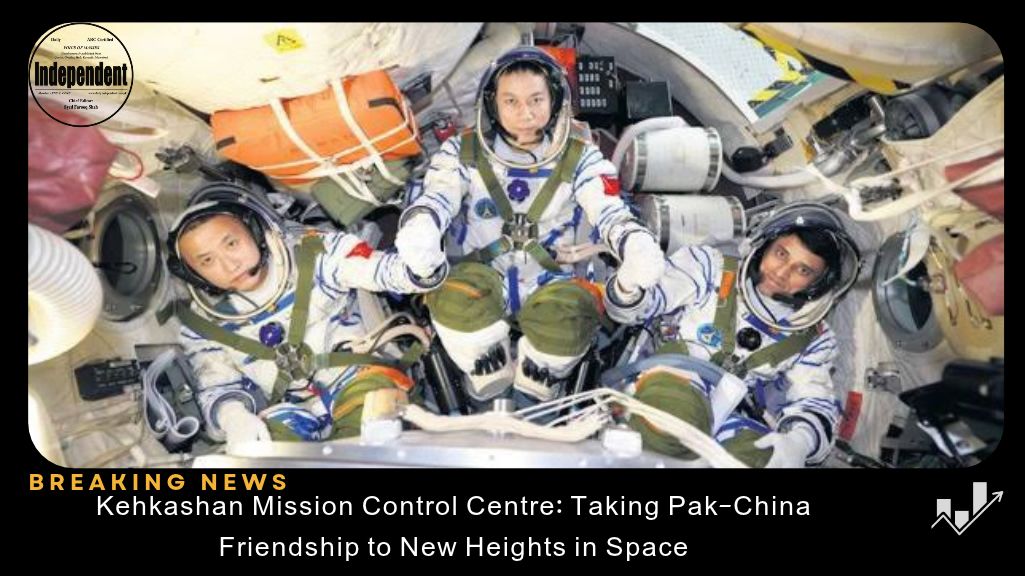
The longstanding friendship between Pakistan and China is expanding beyond diplomatic relations, trade cooperation and strategic partnerships into the fields of science, technology and space exploration. Growing scientific cooperation between the two countries reflects the widening scope of their partnership and its promising future. The training of Pakistani astronaut Muhammad Zeeshan Ali in China and his participation in space-related activities mark a significant milestone for Pakistan and offer fresh inspiration to the country’s younger generation.
To share this spirit with the public and promote scientific awareness among children and young people, a special programme titled **“Kehkashan Mission Control Centre”** was organised at the Pak-China Friendship Centre in Islamabad. The initiative attracted considerable public attention over several days, drawing visitors from different walks of life, particularly students and children, who learned about space exploration, rocket technology, space stations and Pakistan’s space programme.
Addressing the prize distribution ceremony on the concluding day of the programme, Principal Information Officer Raisa Adil said that the friendship between Pakistan and China had now reached the field of space exploration. She described Pakistani astronaut Muhammad Zeeshan Ali’s training in China and his participation in space-related activities as an honour for Pakistan.
She said the main objective of the Kehkashan programme was to develop an interest in space exploration and scientific knowledge among children and young people, helping them understand the demands of the modern world and prepare to contribute to the country’s future development.
Raisa Adil emphasised that the future of every nation is closely linked to its younger generation. Providing children with access to modern knowledge, scientific research and technology can help lead the country towards new milestones of progress. Keeping this vision in mind, the programme featured engaging activities introducing children to the Moon, stars, planets, space travel and space stations. Special boarding passes were also prepared to make the simulated space journey a more exciting and memorable experience.
She also referred to the message of Allama Muhammad Iqbal, the Poet of the East, who encouraged young people to explore worlds beyond the stars. She said that determination, hard work, knowledge and continuous effort were essential for achieving ambitious goals. Pakistan’s youth possess considerable potential, but they need quality education, proper guidance, research opportunities and access to modern technology.
One of the distinctive features of the Kehkashan Mission Control Centre was its design as an interactive scientific experience for children and ordinary visitors. Models of spacecraft and rockets were displayed, attracting the interest of young visitors. Information about spacecraft structures, rocket-powered journeys and different stages of space missions helped children understand scientific concepts they had previously encountered in textbooks.
A special stall of the Pakistan Space and Upper Atmosphere Research Commission (SUPARCO) was also established at the centre. Visitors were provided with information about the space-related activities and experiments of Pakistani astronaut Muhammad Zeeshan Ali, as well as Pakistan’s space programme, scientific research and future opportunities.
The virtual reality experience of a space station was another major attraction. Through this technology, children and young people were able to experience what it might feel like to be inside a space station and observe activities taking place in outer space.
A special programme titled “Jagnoo’s Journey to Space” was also presented to engage young visitors. It helped explain complex concepts of space exploration in a simple and accessible manner. Updates about Zeeshan Ali’s space-related activities and experiences were also shared, keeping visitors informed about developments in the programme.
During the ceremony, Raisa Adil appreciated the efforts of officers and staff of the Ministry of Information and Broadcasting and the Press Information Department (PID) who contributed to the successful organisation of the event. She presented a commemorative shield to the PID staff in recognition of their services. Other officials of the Ministry of Information and Broadcasting were also present.
Space exploration has become an important field of scientific and technological advancement worldwide. Its role continues to grow in communications, climate monitoring, natural disaster forecasting, agricultural development, assessment of Earth’s resources and the advancement of modern technology. Pakistan also needs to encourage young people to pursue these fields and strengthen education in science, technology, engineering and mathematics.
Pakistan-China cooperation in space exploration carries a message of hope and encouragement for the younger generation. China’s achievements and experience in space research offer Pakistan valuable opportunities to learn and enhance its own scientific capabilities. To turn this cooperation into sustainable progress, Pakistan needs to strengthen research institutions, encourage young scientists and equip educational institutions with modern scientific facilities.
Programmes such as the Kehkashan Mission Control Centre stimulate curiosity, encourage children to ask questions and inspire them to dream about their future. A child fascinated today by a model rocket may one day become a Pakistani scientist, engineer or astronaut and bring honour to the country. National progress depends on giving young people not only the confidence to dream but also the opportunities to turn those dreams into reality.
The programme has demonstrated that the potential of Pak-China friendship extends beyond existing areas of cooperation to the frontiers of advanced science and technology. Kehkashan conveyed a message to children and young people that the vastness of space can open new doors of knowledge, research and achievement for them as well.
The continuation of such initiatives can help inspire Pakistan’s younger generation to pursue scientific research and contribute to a future in which the country plays a more prominent role in global scientific progress. This is the true message of the Kehkashan programme and a promising symbol of Pak-China friendship reaching new heights in space exploration.
