

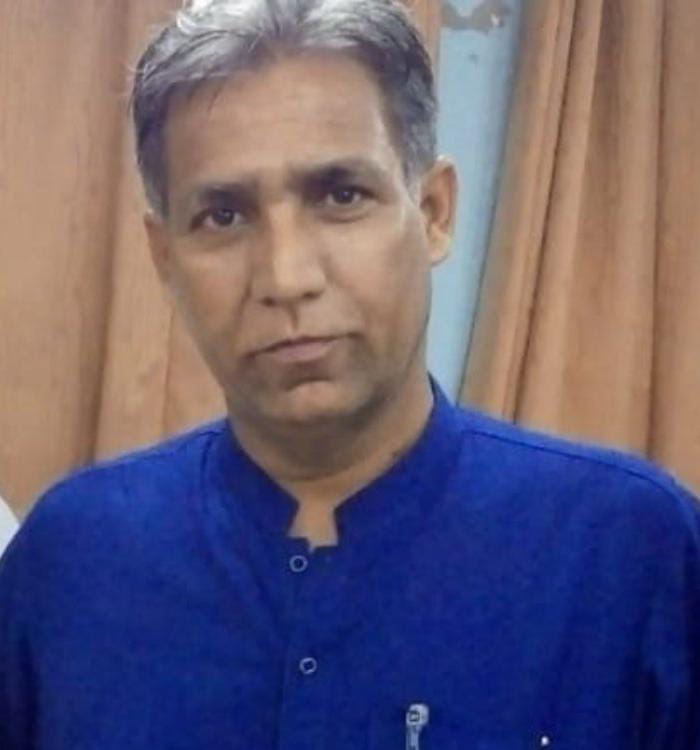
By Rahmatullah Buriro
There are few moments in Pakistan’s political history that go beyond speeches and slogans to shape the future direction of the nation. One such defining moment came in the aftermath of the assassination of Mohtarma Benazir Bhutto, when the country was gripped by grief, anger, uncertainty and political tension.
Homes were in mourning, cities witnessed protests, and the nation faced difficult questions about its political future. Would the country remain united? Would the federation withstand the crisis? What would become of the Pakistan Peoples Party?
In that challenging atmosphere, Asif Ali Khan Zardari, from Larkana, raised a slogan that became an important message in Pakistan’s political history:
“Pakistan Khappe!”
Pakistan is needed. Pakistan must remain united.
These were not merely words expressing emotion. They conveyed a political message of national unity and commitment to the federation. The message was clear: the response to the tragedy of Benazir Bhutto’s assassination should not be the weakening of the country, but the strengthening of its democratic institutions and national unity.
At a time of heightened political uncertainty, the slogan offered an alternative to confrontation and division. It reflected the view that political grievances and national challenges should be addressed through democratic and constitutional means.
Looking back, “Pakistan Khappe” can be seen not simply as an emotional expression, but as a significant political message about national responsibility, federal harmony and the importance of keeping Pakistan united.
Politics of Reconciliation: Wisdom, Not Weakness
To understand Asif Ali Zardari’s political approach, one must understand a central principle of his politics: reconciliation.
His political opponents have often described his willingness to engage with different political parties and stakeholders as a sign of compromise. However, in a diverse federal country like Pakistan, political dialogue and reconciliation are essential for maintaining democratic stability.
Pakistan is home to different provinces, cultures, languages, communities and political viewpoints. Its democratic system requires mutual understanding, political accommodation and respect for constitutional institutions.
Without dialogue, Parliament cannot function effectively, governments face difficulties in maintaining stability, and the federation becomes vulnerable to political tensions.
Zardari has consistently advocated political engagement and parliamentary continuity. His approach has emphasised dialogue over confrontation and cooperation over political isolation.
The continuity of Parliament is vital to the democratic system. When Parliament functions, the Constitution and democratic institutions have the opportunity to operate effectively. Strong parliamentary institutions, in turn, contribute to political stability and the protection of citizens’ rights.
One of the notable aspects of Zardari’s political career has been his ability to maintain communication with political parties across the political spectrum. Even during periods of political tension, he has generally favoured dialogue as a means of finding common ground.
This approach has made reconciliation an important feature of his political identity.
The Constitutional Role of the President of Pakistan
As President of Pakistan, Asif Ali Khan Zardari occupies a constitutional office whose authority and responsibilities are defined by the Constitution.
The presidency is an important institution within Pakistan’s parliamentary democratic framework. Its role must be exercised in accordance with constitutional provisions, parliamentary authority and the established democratic system.
Zardari’s emphasis on constitutional processes reflects the importance of resolving national and political questions through established institutions rather than through confrontation.
The recent debate surrounding the creation of new provinces and the possibility of a referendum has once again highlighted the importance of constitutional procedures.
Such matters require serious parliamentary discussion, political consensus and adherence to the Constitution. Any major constitutional or administrative change must follow the procedures prescribed by the Constitution and the relevant laws.
This approach is essential for maintaining national unity, protecting provincial rights and ensuring the stability of the federation.
The principle is straightforward: Pakistan’s political and constitutional questions should be resolved through Parliament, democratic consultation and the rule of law.
Why Does Political Criticism Sometimes Become Personal?
Political differences are a natural part of democracy. Leaders and political parties must remain open to criticism, scrutiny and public accountability.
However, political debate is most productive when it focuses on policies, governance, public performance and constitutional responsibilities rather than personal attacks.
Asif Ali Zardari, like other major political figures, has remained a subject of public criticism and political controversy. Social media has further intensified political debate, where edited videos, unverified claims and personal commentary can sometimes complicate public understanding.
It is important that political parties, supporters and opponents distinguish between legitimate criticism and misleading information.
A healthy democracy requires responsible political communication, factual reporting and respect for differing opinions.
Zardari’s supporters point to his political experience, his emphasis on reconciliation and his commitment to the continuity of the parliamentary system as important aspects of his political legacy. His critics, meanwhile, are entitled to question his policies and political decisions.
Ultimately, the strength of democratic debate lies in examining political performance on the basis of facts and public interest.
Why Is Zardari’s Political Role Important Today?
Pakistan continues to face a challenging political, economic and constitutional environment. Discussions about provincial rights, administrative arrangements, constitutional questions and economic pressures have highlighted the need for political understanding and institutional cooperation.
In such circumstances, dialogue among political parties and stakeholders becomes particularly important.
A political leader who can communicate across party lines and encourage negotiations can contribute to reducing tensions and finding workable solutions.
Zardari’s political experience and longstanding engagement with different political groups give him an opportunity to play a constructive role in this regard.
As President, his responsibilities are defined by the Constitution. As a political leader associated with the Pakistan Peoples Party, he also represents the political positions and interests of his party.
These roles must be understood within their respective constitutional and political frameworks.
The rights of Sindh and other provinces are an essential part of Pakistan’s federal structure. Protecting provincial rights while strengthening national unity is not a contradiction; rather, it is a fundamental requirement of a successful federation.
The strength of Sindh, like that of every other province, contributes to the strength of Pakistan as a whole.
This is where the message of “Pakistan Khappe” remains relevant: provincial aspirations and national interests can be pursued together through constitutional means, democratic dialogue and mutual respect.
Conclusion: Pakistan Khappe — A Message for Today and Tomorrow
“Pakistan Khappe” was more than a political slogan associated with the events following Benazir Bhutto’s assassination. It represented a message of national unity at a time of uncertainty and remains relevant to discussions about Pakistan’s political future.
Asif Ali Zardari’s politics of reconciliation, whether viewed positively by his supporters or critically by his opponents, has been an important part of the country’s political landscape.
Pakistan today needs constructive political engagement, strong democratic institutions, respect for the Constitution and cooperation among its federating units.
The country does not benefit from unnecessary confrontation. It benefits from dialogue, mutual understanding and responsible leadership.
Political differences should be addressed through Parliament and constitutional institutions. Provincial rights should be protected, democratic continuity should be maintained, and national unity should remain a shared priority.
The message is simple and enduring:
Pakistan Khappe — Pakistan must remain united.
